
Found Mold in Your Apartment? Get Expert Help Fast
Dealing with mold in your rental? You’re not alone. Learn about your tenant rights, health risks, and safe removal options. Our IICRC-certified team serves Ontario and Quebec with free virtual inspections.
Get Free Virtual Inspection
IICRC Certified
Professional mold remediation experts
15+ Years
Experience serving Ontario & Quebec
24-Hour Response
Free virtual inspection results
Satisfaction Guaranteed
Complete mold removal warranty
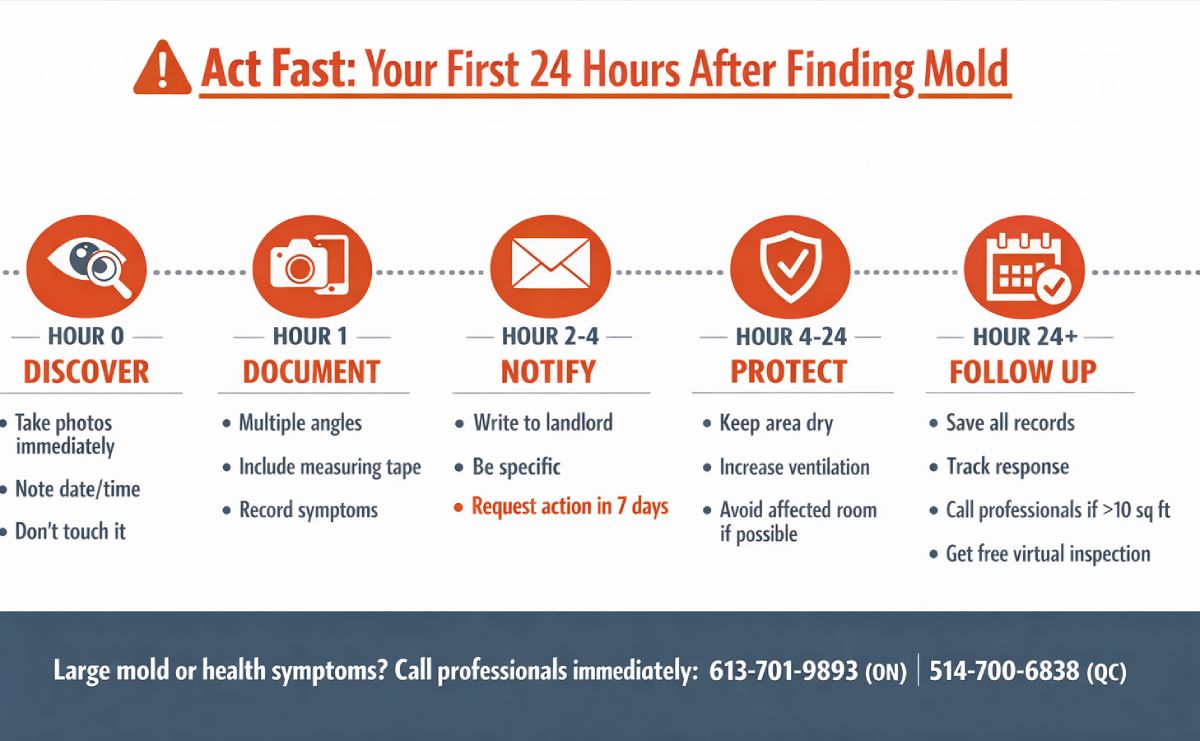
Quick Action Required? If you’ve found mold larger than 10 square feet, or if you’re experiencing health symptoms, schedule a professional inspection today. Mold can grow within 24-48 hours of water damage.
Is Apartment Mold Making You Sick?
What Are the Most Common Health Symptoms?
Mold releases spores into your apartment air that you breathe constantly. These spores cause several health problems that often get worse the longer you’re exposed.
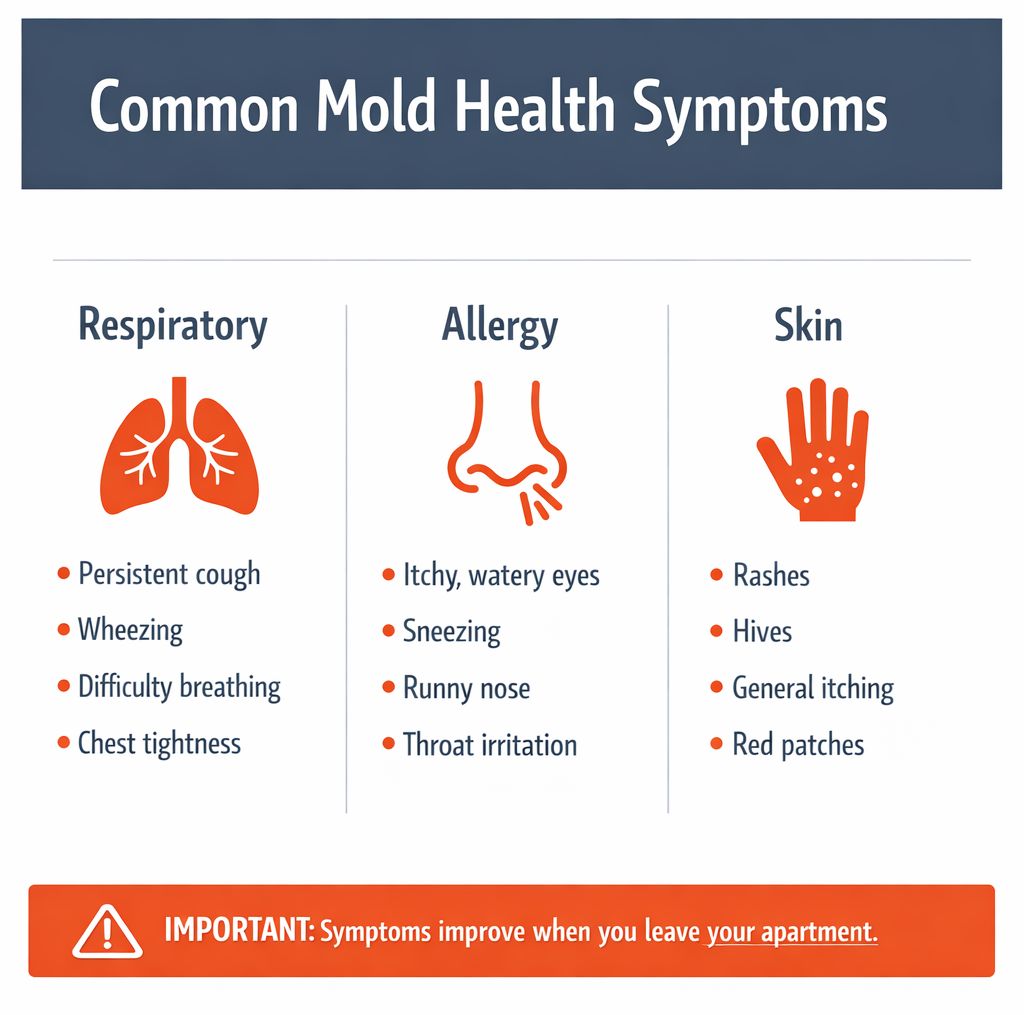
Respiratory symptoms include persistent coughing, wheezing, difficulty breathing, and a feeling like you have a cold that never ends. These symptoms typically improve when you leave your apartment.
Allergy symptoms affect your eyes, nose, and throat. You might experience itchy or watery eyes, constant sneezing, runny nose, or throat irritation. Many people think they have seasonal allergies when apartment mold is actually the cause.
Skin reactions can include rashes, hives, or general itching. Some people develop red, irritated patches after touching moldy surfaces or breathing spores for extended periods.
⚠️ High-Risk Groups Need Immediate Action
Children, elderly residents, people with asthma, and anyone with weakened immune systems face higher risks from mold exposure. If you fall into these categories, document your symptoms and see a doctor immediately. Learn more about health risks of mold exposure.
Can Black Mold Actually Kill You?
The truth about “black mold” (Stachybotrys chartarum) is less scary than media reports suggest. While it can produce mycotoxins that cause health problems, it rarely causes death in healthy adults.
What matters: All indoor mold growth requires removal, regardless of color. Black, white, green, or orange mold all indicate moisture problems that need fixing. The color doesn’t determine danger level.
Large amounts of any mold type (more than 10 square feet), mold that returns after cleaning, or mold causing health symptoms requires professional mold testing and removal.
Your Legal Rights as a Tenant
Is Your Landlord Required to Fix Mold?
Yes. Canadian landlords have a legal duty called the “warranty of habitability.” They must keep your apartment safe and livable.
🏛️ Ontario Protection
The Residential Tenancies Act requires landlords to maintain properties in good repair and meet health standards. Mold affecting your health violates this requirement.
Landlords must fix structural issues causing mold: roof leaks, pipe problems, and ventilation failures.
🏛️ Quebec Protection
The Civil Code requires landlords to provide “peaceful enjoyment” and keep properties in good condition. Quebec’s Tribunal administratif du logement handles disputes.
Bilingual service means you can communicate in French or English about mold issues.
When Might You Be Responsible?
Tenants can be held responsible if their actions directly caused the mold. This includes:
- Keeping windows sealed without air circulation
- Running humidifiers excessively
- Failing to report leaks you caused
- Not using bathroom or kitchen ventilation fans

Important: Landlords often try to blame tenants unfairly. If you showered normally with fans running and mold still grew, that’s likely a building problem, not your fault. Document your normal habits to protect yourself.
What Should You Do First?
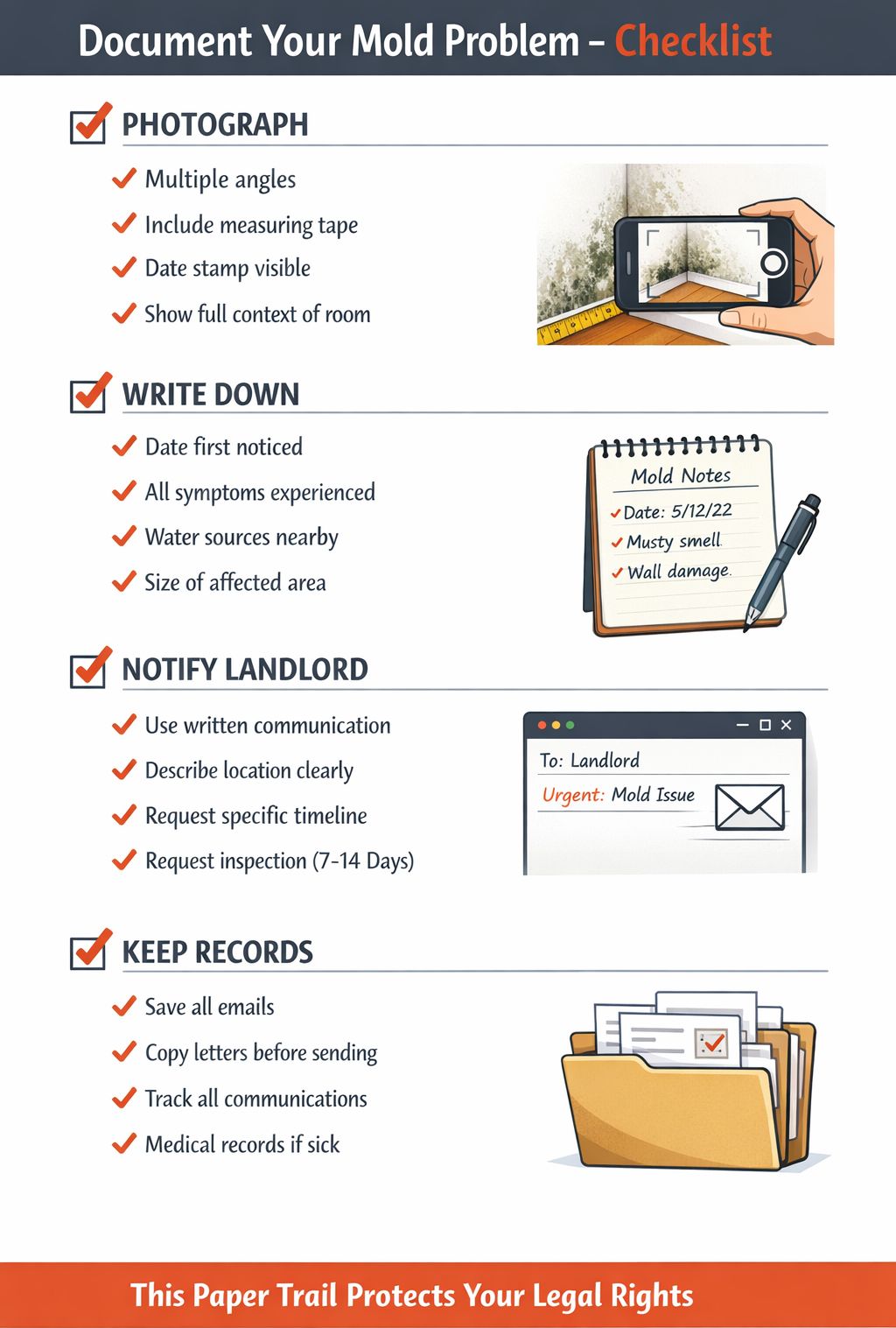
1. Document everything: Take date-stamped photos from multiple angles showing location, size, and extent. Include a measuring tape for scale.
2. Notify in writing: Email or send a letter describing where the mold is, how large it appears, and any health symptoms. Request inspection and repair within 7-14 days.
3. Keep all records: Save emails, letter copies, and delivery confirmations. This creates a legal paper trail if you need to take action later.
If your landlord doesn’t respond within a week, file complaints with Ontario’s Landlord and Tenant Board or Quebec’s Tribunal administratif du logement. You can also contact municipal bylaw enforcement in cities like Ottawa, Montreal, or Kingston.
How to Remove Mold Safely
Can You Clean It Yourself or Need Professionals?
The EPA’s “10 square feet rule” provides clear guidance: Mold covering less than 10 square feet (roughly 3×3 feet) on non-porous surfaces can often be cleaned by tenants. Anything larger requires professional remediation.
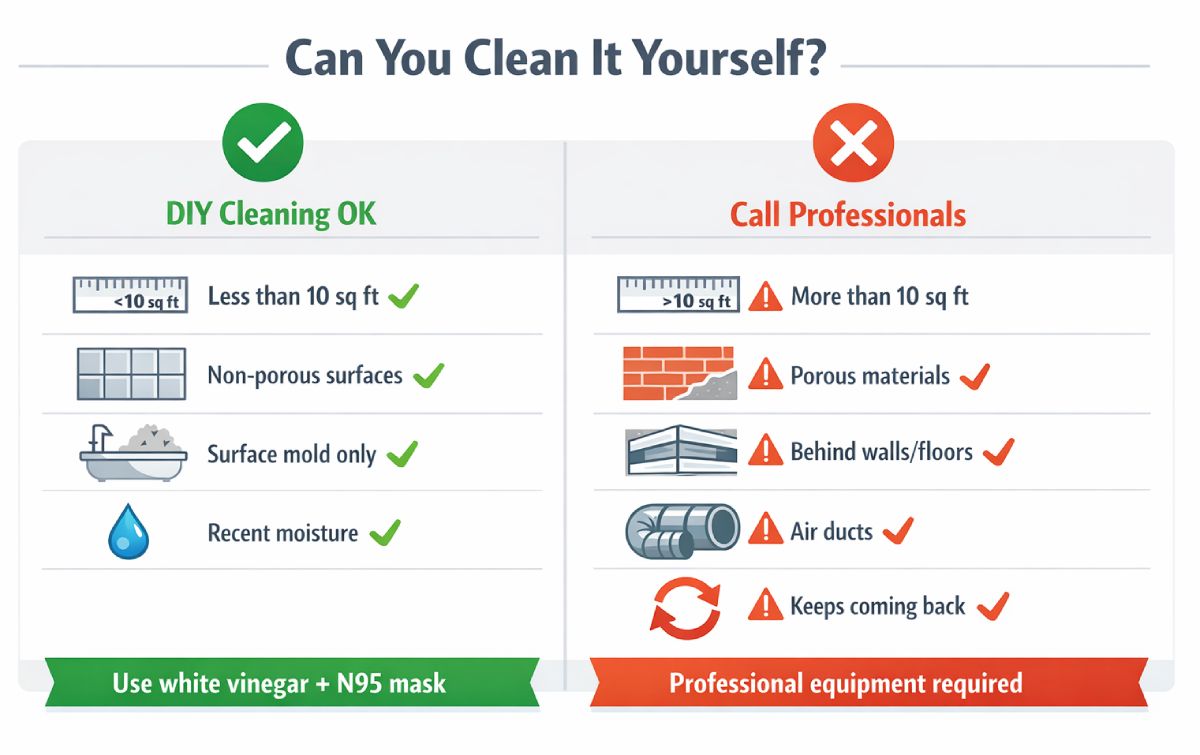
⚠️ Call Professionals For: Mold on porous materials (drywall, carpet, insulation), hidden mold behind walls, mold in HVAC systems, mold from sewage backup, or mold that returns after cleaning.
Safe DIY Cleaning for Small Areas
Equipment needed: N95 respirator mask, waterproof gloves, safety goggles, and white vinegar.
Process: Spray undiluted white vinegar on the moldy area. Let sit for one hour minimum. Scrub with a brush, wipe with disposable paper towels, and throw towels in a sealed bag. Dry the area completely.
Never use bleach: Bleach only kills surface mold and adds moisture that feeds mold growth. It doesn’t penetrate porous materials and can make problems worse.
For specific areas, see our guides on bathroom mold, shower mold, and basement mold.
What Professional Remediation Includes
Professional mold removal follows strict protocols:
- Moisture detection using specialized meters and thermal imaging
- Containment with plastic sheeting and negative air pressure
- HEPA filtration during removal
- Complete removal of contaminated materials
- Antimicrobial treatment of surfaces
- Post-remediation verification testing

Our team serves apartments throughout Ontario and Quebec, including Cornwall, Gatineau, Laval, and Belleville.
How to Prevent Mold Growth in Apartments
Daily Habits That Stop Mold
Prevention is easier and cheaper than removal. These simple actions significantly reduce mold risk:
💨 Ventilation
- Run bathroom fans during and 20 minutes after showers
- Use kitchen exhaust when cooking
- Open windows regularly when weather permits
- Keep interior doors open for air circulation
💧 Moisture Control
- Keep humidity between 30-50%
- Wipe window condensation daily
- Fix leaks immediately
- Keep furniture 2-3 inches from walls
Winter Challenges in Ontario and Quebec
Window condensation is the biggest winter issue. When cold outdoor air meets warm indoor air at windows, moisture condenses and runs into wall cavities. Wipe condensation daily during winter.

Reduced ventilation traps moisture from cooking, showering, and breathing. Crack windows briefly, run exhaust fans longer, and use dehumidifiers.
Different areas face different challenges. Apartments in Brockville and Carleton Place experience harsh winters with severe temperature swings that increase condensation problems.
📅 Seasonal Action Plan
Spring: Check basement after snow melt, report roof leaks immediately
Summer: Use AC or dehumidifiers, keep humidity below 50%
Fall: Request HVAC maintenance, clean apartment thoroughly
Winter: Wipe condensation daily, maintain consistent heating

Frequently Asked Questions
No, you should avoid sleeping in moldy bedrooms when possible. Breathing mold spores for 6-8 hours every night increases health risks significantly. If you cannot avoid the room, keep doors open for ventilation, run air purifiers with HEPA filters, and sleep as far from the mold as possible. Young children, elderly people, and anyone with respiratory conditions should definitely not sleep in moldy bedrooms.
Generally no, unless you directly caused the mold through negligence. If mold resulted from structural issues like leaky roofs, broken pipes, or poor building ventilation, the landlord pays. Most cases favor tenants because buildings should withstand normal occupancy without developing mold. Document your normal living habits to protect yourself from unfair blame.
Mold can begin growing within 24-48 hours after water exposure on porous materials like drywall, carpet, and wood. Within a week, visible colonies often appear. This is why immediate action is critical after floods, pipe bursts, or major leaks. Your landlord must begin drying and remediation within 24 hours to prevent mold growth.
Yes, opening windows regularly helps prevent mold by reducing indoor humidity and improving air circulation. However, timing matters. Open windows when outdoor humidity is lower than indoor humidity. In summer, open windows in early morning or evening. In winter, even brief window opening (10-15 minutes) helps exchange humid indoor air.
Professional mold inspection typically costs $300-$600 for average apartments. However, Mold Inspection Canada offers free virtual mold inspections where you upload photos and receive expert assessment within 24 hours. On-site inspections include moisture detection, visual assessment, and air or surface sampling with lab analysis. Learn more about mold inspection costs.
🎯 Take Action Against Apartment Mold Today
Don’t let mold compromise your health or your right to safe housing. Get expert help from our IICRC-certified team serving Ontario and Quebec.
- Free virtual mold inspection with 24-hour response
- Comprehensive on-site inspections with moisture detection
- Complete mold remediation with guaranteed results
- Same-day reporting for urgent situations
- Bilingual service for Quebec residents
- Flexible financing options available
Call Us Now: