
Windows Mold: Complete Guide to Removal, Prevention, and Health Protection
Mold around windows affects millions of Canadian homes each year. This black, green, or white growth appears most often during winter months when warm indoor air meets cold glass surfaces. Understanding how to identify, remove, and prevent window mold protects your family’s health and your home’s value.What Is Window Mold and Why Should You Care?
Window mold grows when moisture meets organic materials around your windows. This fungus thrives in temperatures between 40-70°F and humidity levels above 60%. Most window mold consists of common species like Cladosporium, Aspergillus, or Penicillium rather than toxic black mold.
🔍 Quick Identification Checklist:
- Black, green, white, or brown spots on window sills
- Musty smell near windows
- Fuzzy or woolly texture on surfaces
- Water droplets or condensation on glass
- Discolored caulk or paint around frames

The presence of mold indicates excess moisture in your home. Left untreated, mold spreads beyond windows to walls, furniture, and HVAC systems. Professional mold inspection can determine the full extent of contamination and identify hidden moisture sources.
Health Risks: How Window Mold Affects Your Family
What Symptoms Should You Watch For?
Window mold exposure causes immediate and long-term health problems. Mold spores become airborne when disturbed, entering your lungs and triggering various reactions.
Common Symptoms Include:
- Sneezing and runny nose
- Red, watery eyes
- Skin rashes or hives
- Coughing and throat irritation
- Headaches and fatigue
Severe Reactions May Cause:
- Asthma attacks or breathing difficulties
- Chronic sinusitis
- Lung infections in vulnerable people
- Worsening of existing respiratory conditions
Who Faces Higher Risks?
High-Risk Groups: Children, elderly adults, and people with existing respiratory conditions, allergies, or weakened immune systems experience more severe symptoms from mold exposure.
If family members develop unexplained respiratory symptoms that improve when leaving home, window mold may be the cause. Professional mold testing can confirm mold species and concentration levels in your indoor air.
Why Does Mold Grow Around Windows?
What Causes Condensation on Windows?
Condensation forms when warm, humid indoor air contacts cold window glass. This process happens most often during winter when indoor temperatures reach 68-72°F while outdoor temperatures drop below freezing.
Primary Moisture Sources:
- Cooking steam from kitchens
- Shower humidity from bathrooms
- Breathing and daily activities
- Clothes drying indoors
- Inadequate ventilation systems
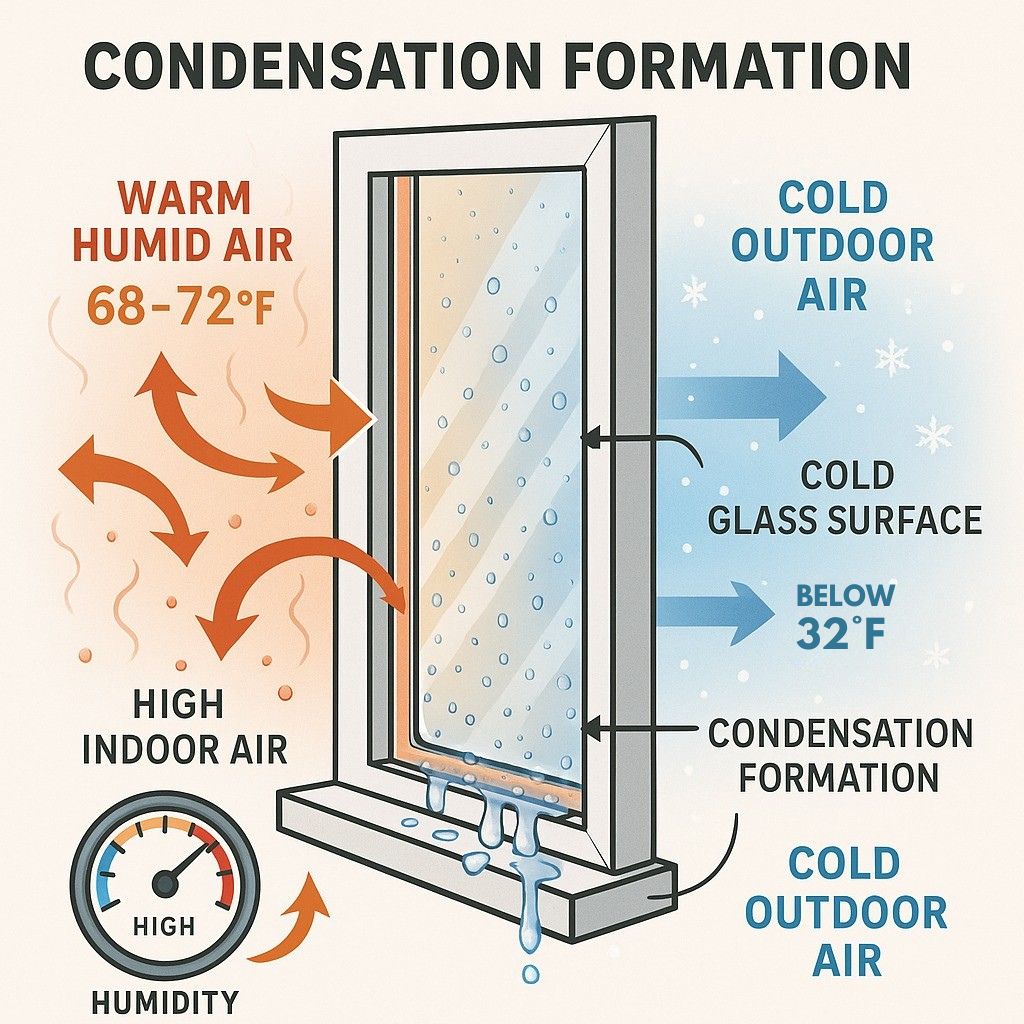
Modern homes trap moisture more effectively than older houses due to improved insulation and airtight construction. While energy-efficient, these homes require active moisture management to prevent mold growth.
What Structural Problems Create Mold?
Beyond condensation, structural issues contribute to window mold development. Poor sealing allows outdoor moisture to enter while preventing indoor humidity from escaping.
Common Structural Causes:
- Damaged window seals or weatherstripping
- Cracked caulk around frames
- Leaking gutters near windows
- Poor attic insulation above windows
- Missing vapor barriers in walls
Identifying these underlying issues prevents mold recurrence after cleaning. Professional mold inspection services use moisture meters and thermal imaging to locate hidden water sources.
How to Remove Mold From Window Frames and Sills
What Safety Equipment Do You Need?
Safety First: Always protect yourself before starting mold removal. Disturbing mold releases spores into the air, increasing exposure risks.
Essential Safety Gear:
- N-95 respirator or face mask
- Rubber gloves
- Safety goggles
- Old clothes or disposable coveralls
- Plastic sheeting to contain work area
Safety Rules:
- Never mix bleach with ammonia or vinegar
- Open windows for ventilation during cleaning
- Remove contaminated materials in sealed bags
- Shower and wash clothes after cleaning
What Natural Cleaning Methods Work Best?
Natural cleaning solutions effectively remove most window mold without harsh chemical exposure. These methods work best for small areas under 10 square feet.

When Should You Use Bleach Solutions?
Bleach provides the most effective mold removal for non-porous surfaces like glass and aluminum window frames. However, bleach cannot penetrate porous materials like wood or drywall.
Proper Bleach Mixture:
Combine 1 cup bleach with 1 gallon water. Apply with a spray bottle and allow 10 minutes contact time. Scrub surfaces with a stiff brush, rinse thoroughly, and dry completely.
Important Bleach Safety:
- Use only in well-ventilated areas
- Never mix with other cleaning products
- Wear gloves and eye protection
- Keep children and pets away during use
For extensive mold growth exceeding 10 square feet, consider professional mold removal services rather than DIY cleaning methods.
How to Prevent Mold From Returning on Windows
What Humidity Levels Prevent Mold Growth?
Maintaining indoor humidity between 30-50% prevents most mold growth around windows. Humidity above 60% creates ideal conditions for mold development.
Effective Humidity Control Methods:
- Install bathroom and kitchen exhaust fans
- Use dehumidifiers in basements and humid rooms
- Run air conditioning during summer months
- Open windows daily for fresh air circulation
- Avoid over-watering indoor plants
Monitoring Tools:
Digital hygrometers cost $10-30 and provide accurate humidity readings. Place monitors near problem windows to track moisture levels throughout the day.
How Can You Improve Window Insulation?
Better insulation reduces condensation by keeping window surfaces warmer. This prevents warm indoor air from reaching its dew point on cold glass.
Insulation Improvements:
- Install storm windows or upgrade to double-pane glass
- Apply weatherstripping around movable window parts
- Caulk gaps between frames and walls
- Install window film or thermal curtains
- Add insulation to walls surrounding windows

What Daily Habits Prevent Window Mold?
Simple daily actions dramatically reduce mold growth risks around windows. Consistency matters more than perfection in mold prevention.
Daily Prevention Habits:
- Wipe condensation from windows each morning
- Open curtains and blinds during daytime
- Run exhaust fans during cooking and showering
- Keep furniture 3 inches from exterior walls
- Check windows weekly for new moisture or mold growth
Weekly Maintenance:
Clean window sills and frames with mild detergent solution. Inspect caulk and weatherstripping for damage. Remove any visible moisture or early mold growth immediately.
Best Cleaners and Products for Window Mold Removal
What Commercial Products Work Most Effectively?
Commercial mold cleaners offer convenience and proven effectiveness for window mold removal. Look for products containing active ingredients like hydrogen peroxide, quaternary ammonium compounds, or sodium hypochlorite.
Top-Rated Commercial Options:
- Concrobium Mold Control – Non-toxic, residual protection
- Tilex Mold & Mildew Remover – Fast-acting bleach formula
- RMR-86 Instant Mold Stain Remover – Professional strength
- Benefect Decon 30 – Botanical-based disinfectant
Application Tips: Follow manufacturer instructions exactly for contact time and dilution ratios. Test products on inconspicuous areas first to check for surface damage or discoloration.
How Do Natural vs. Chemical Solutions Compare?
✅ Natural Solution Benefits:
- Safer around children and pets
- No toxic fumes or residues
- Environmentally friendly disposal
- Lower cost per application
⚡ Chemical Solution Advantages:
- Faster mold elimination
- Residual protection against regrowth
- More effective on stubborn stains
- Professional-grade results
Choose cleaning methods based on mold severity, household safety concerns, and personal preferences. Combine approaches for best results – use natural solutions for maintenance and chemical cleaners for serious infestations.
Mold on Different Window Types: Material-Specific Solutions
How Does Mold Affect Vinyl Windows?
Vinyl windows resist mold growth on their smooth, non-porous surfaces. However, mold often develops in the weatherstripping, drainage holes, and track systems where dirt and moisture accumulate.
Vinyl Window Cleaning:
Use mild dish soap and water for regular cleaning. Avoid abrasive cleaners that scratch vinyl surfaces. Pay special attention to drainage weep holes that can become clogged with mold and debris.
Common Vinyl Window Problems:
- Mold growth in sliding tracks
- Blocked drainage holes causing water retention
- Deteriorated weatherstripping harboring mold
- Condensation between double-pane glass layers
What Special Care Do Wood Windows Require?
Wood windows absorb moisture, making them more susceptible to mold penetration. Surface cleaning may not eliminate mold that has grown into the wood fibers.

Wood windows with extensive mold damage may require professional assessment to determine if replacement is more cost-effective than restoration.
Why Do Aluminum Windows Develop Condensation?
Aluminum conducts heat and cold efficiently, making aluminum window frames prone to condensation formation. The metal frames become cold bridges that attract moisture from warm indoor air.
Aluminum Window Solutions:
- Install thermal breaks in existing frames
- Add weatherstripping to reduce air leaks
- Apply insulating window film
- Consider frame replacement with thermally broken aluminum
Cleaning Aluminum Frames:
Use non-abrasive cleaners to avoid scratching the aluminum finish. Pay attention to corners and joints where moisture typically accumulates.
Signs of Mold Damage to Windows and Home Structure
When Does Mold Indicate Serious Structural Problems?
Window mold sometimes signals deeper moisture issues within wall cavities or around window installations. Recognizing these warning signs prevents costly structural damage.
Structural Warning Signs:
- Mold spreading to walls around windows
- Soft or spongy window sills or frames
- Peeling paint or wallpaper near windows
- Musty odors that persist after cleaning
- Water stains on ceiling or walls above windows
Hidden moisture sources include roof leaks above windows, plumbing leaks within walls, ice dam formation and melting, exterior wall moisture penetration, and HVAC condensation problems.
How Can You Tell If Mold Damage Requires Professional Help?
DIY cleaning works for surface mold covering less than 10 square feet. Larger areas or signs of structural damage require professional evaluation and remediation.
When to Call Professionals:
- Mold covers more than 10 square feet
- Mold returns quickly after cleaning
- Strong musty odors persist
- Family members develop health symptoms
- Visible structural damage around windows
Professional mold inspection includes moisture mapping, air quality testing, and detailed remediation planning. Certified inspectors identify all mold sources and develop comprehensive treatment strategies.
Mold Around Windows in Specific Rooms
Why Are Bathroom Windows Especially Prone to Mold?
Bathroom windows face constant moisture from showers, baths, and daily hygiene activities. Poor ventilation compounds the problem by trapping humid air around window surfaces.
Bathroom-Specific Solutions:
- Install and use exhaust fans during and after showers
- Open windows for 10-15 minutes after bathing
- Wipe down window surfaces daily
- Choose mold-resistant caulk for bathroom applications
- Consider moisture-resistant window treatments
Shower steam condenses heavily on cool window glass, creating ideal conditions for bathroom mold growth. Inadequate ventilation allows moisture to linger for hours after shower use.
How Do Basement Windows Differ From Other Locations?
Basement windows face unique challenges from below-grade installation, limited natural ventilation, and contact with soil moisture. These conditions create persistent humidity that promotes mold growth.
Basement Window Strategies:
- Install and run dehumidifiers year-round
- Improve exterior drainage around foundation
- Seal basement walls against moisture penetration
- Ensure adequate basement ventilation
- Consider basement window replacement with better sealing
Basement Moisture Control:
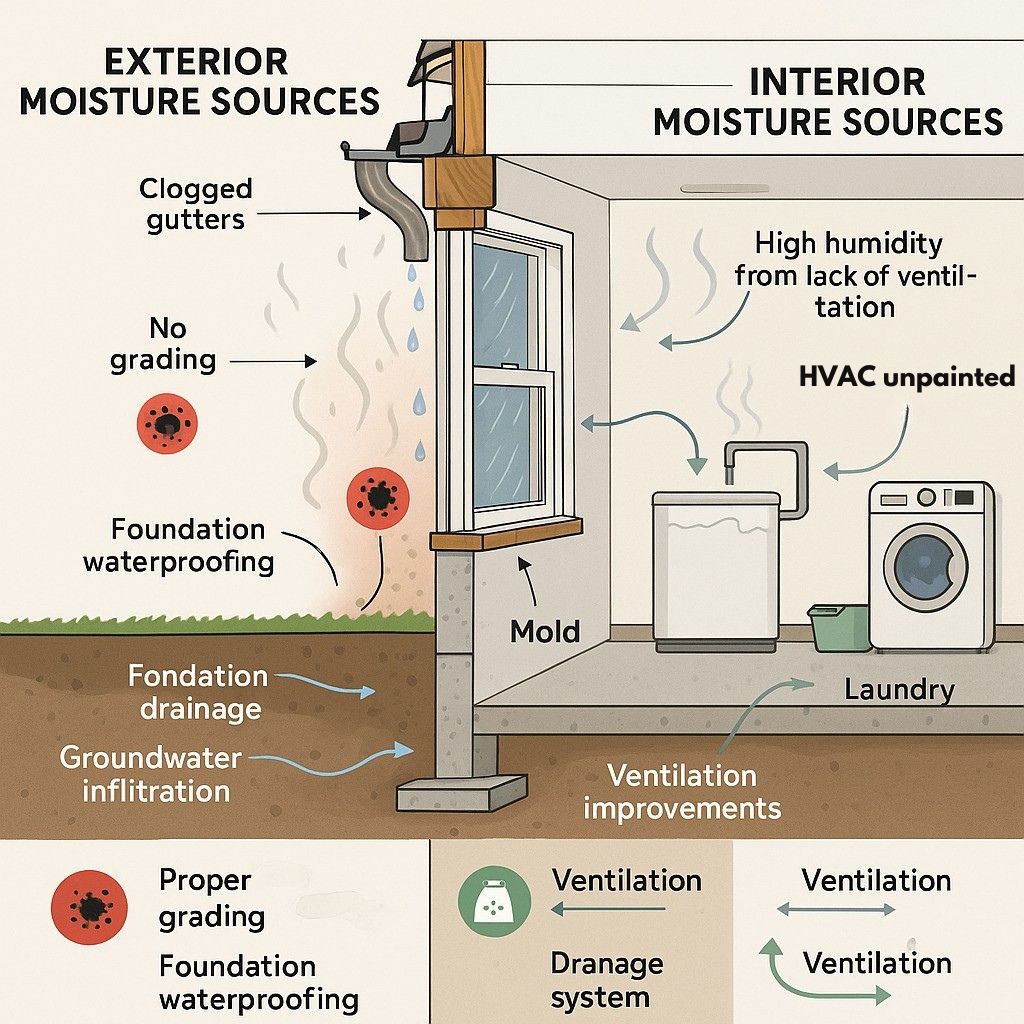
Address exterior grading, gutters, and foundation waterproofing to reduce moisture entering through basement walls. Basement mold often indicates broader moisture management issues requiring comprehensive solutions.
What About Kitchen Windows Above Sinks?
Kitchen windows above sinks receive direct steam exposure from cooking, dishwashing, and food preparation activities. These windows often lack adequate ventilation to remove moisture quickly.
Kitchen Window Protection:
- Use range hoods during cooking
- Run exhaust fans when washing dishes
- Open windows while cooking when weather permits
- Install moisture-resistant window treatments
- Wipe condensation immediately after cooking activities
When to Call Professional Mold Services
What Situations Require Expert Assessment?
Professional mold services become necessary when DIY efforts fail or health concerns arise. Certified mold inspectors have specialized equipment and training to identify hidden mold sources and develop effective treatment plans.
Professional Assessment Indicators:
- Mold covers more than 10 square feet total
- Mold returns within weeks of cleaning
- Multiple family members develop respiratory symptoms
- Strong musty odors persist throughout house
- Visible water damage or structural problems
Certified mold inspectors use moisture meters, thermal imaging cameras, and air sampling equipment to locate all mold sources. They develop written remediation plans and can recommend qualified contractors for larger projects.
How Much Do Professional Services Cost?
Professional mold services vary in cost based on problem severity, home size, and services required. Understanding typical pricing helps budget for professional assistance when needed.
Typical Service Costs:
- Mold inspection: $300-600
- Air quality testing: $400-800
- Small area remediation (under 10 sq ft): $500-1,000
- Whole room remediation: $1,000-4,000
- Structural drying and repair: $2,000-8,000+
Value of Professional Services: Professional remediation includes proper containment, HEPA filtration, and post-treatment verification testing. This comprehensive approach prevents cross-contamination and ensures complete mold elimination.
What Questions Should You Ask Mold Professionals?
Choosing qualified mold professionals protects your family and property investment. Ask specific questions about credentials, methods, and guarantees before hiring any service provider.
Important Questions:
- What certifications do your inspectors hold?
- Do you provide written estimates and remediation plans?
- What equipment do you use for testing and remediation?
- How do you prevent cross-contamination during work?
- What guarantees do you offer on your work?
Mold Inspection Canada holds multiple industry certifications including NORMI, IICRC, and CRMI credentials. Their 15+ years of experience in Ontario and Quebec provides the expertise needed for thorough mold assessment and remediation planning.
🔬 Professional Mold Assessment Available
Get expert help from Ontario and Quebec’s trusted mold professionals. Free virtual consultations available.
📋 Key Takeaways for Window Mold Management
Window mold prevention requires consistent moisture control, regular maintenance, and prompt action when problems arise. Focus on reducing humidity, improving ventilation, and maintaining window sealing to prevent most mold growth.
Essential Action Points:
- Clean small mold areas immediately with appropriate safety gear
- Maintain indoor humidity between 30-50% year-round
- Address underlying moisture sources for permanent solutions
- Seek professional help for areas exceeding 10 square feet
- Document mold problems for insurance and health tracking
Monthly Action Steps:
- Check windows for condensation and early mold growth
- Clean window sills and frames with mild detergent
- Test and maintain humidity control equipment
- Inspect weatherstripping and caulk for damage
- Monitor family health for mold-related symptoms
Taking proactive steps now prevents costly remediation and protects your family’s health. For comprehensive mold assessment and professional guidance, contact Mold Inspection Canada to schedule your consultation today.