
Mold Inspection Backed by Verified Certifications
Anyone can call themselves a mold inspector. Our inspectors carry eight recognized industry certifications and memberships, and we show you exactly what each one means and where to confirm it.
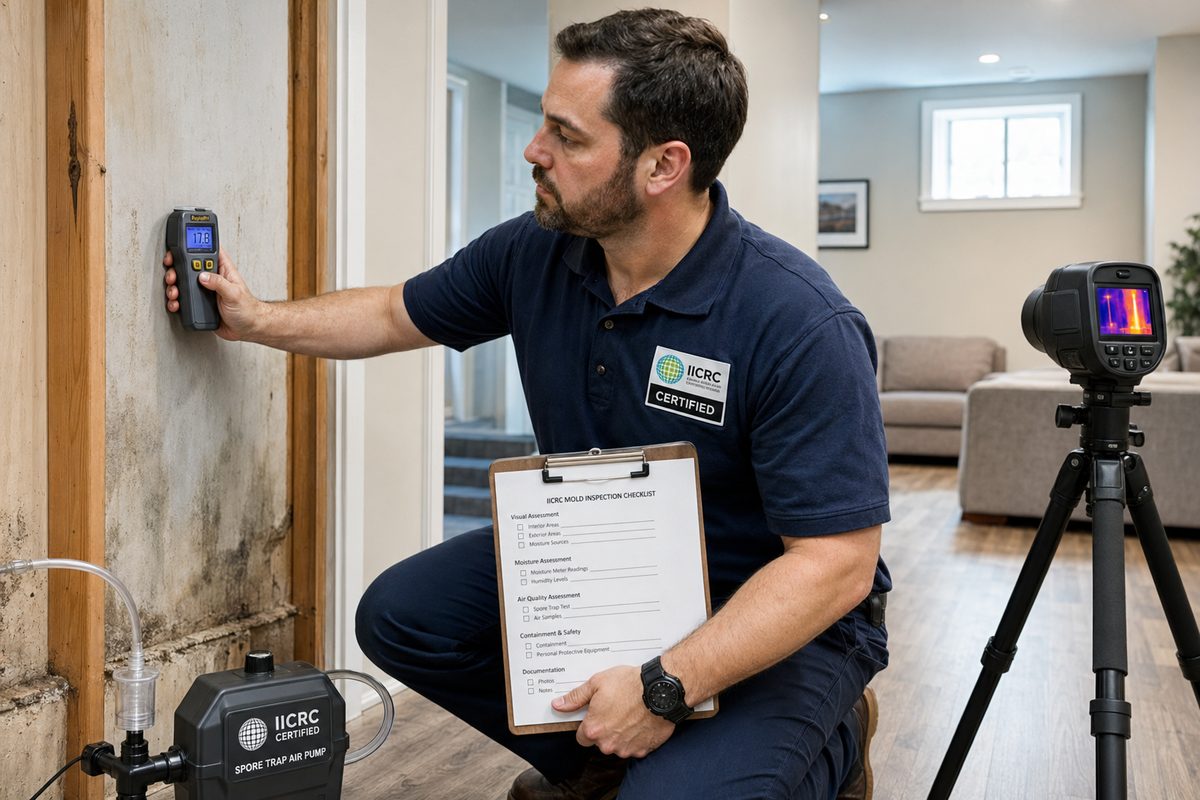
Why certifications matter when you hire a mold inspector
Mold inspection isn’t a licensed trade in most of Canada. That means the difference between a thorough, defensible inspection and a guess often comes down to training.
Certifications tell you an inspector has been tested against an independent standard, knows how to sample air and surfaces correctly, and reads the results the way a lab and an insurer expect. They also keep our team current as standards and equipment change.
We hold credentials from the bodies that set the rules for our industry, including the IICRC S520 mold remediation standard. Below you’ll find every certification we carry, what it covers, and a link to the issuing body so you can read about it yourself.
We link each badge to the organization that issues it, not to a marketing page. If you ever want current details for the inspector assigned to your job, just ask and we’ll share them.
Our certifications
Six training and competency certifications held across our inspection team.
IICRC Certified
The Institute of Inspection, Cleaning and Restoration Certification is the global body that writes the S520 standard for mold remediation and certifies firms and technicians against it.
InterNACHI Certified Mold Inspector
A mold-inspection credential from the International Association of Certified Home Inspectors, earned through accredited coursework and exams.
NORMI Certified
The National Organization of Remediators and Microbial Inspectors trains and certifies professionals in mold assessment, remediation, and indoor air quality.
Certified Residential Mold Inspector (CRMI)
A Professional Mold Inspection Institute credential covering residential mold inspection, assessment, and clearance testing through a 90-hour training program.
Certified Commercial Mold Inspector (CCMI)
The Professional Mold Inspection Institute’s commercial credential, covering the added complexity of offices, warehouses, multi-unit buildings, and retail spaces.
Certified MICRO Mold Inspector
A credential from MICRO, the Mold Inspection, Consulting and Remediation Organization, confirming the training to inspect to recognized industry guidelines.
Professional memberships
Industry associations we belong to alongside our certifications.
NAMRI Member
Membership in the National Association of Mold Remediators and Inspectors, a professional association for inspectors and remediation specialists.
NAMP Member
Membership in the National Association of Mold Professionals, one of the long-standing membership and training bodies in the field.
What a certified inspection changes
The credentials above aren’t decoration. Here’s how a certified inspection compares with an uncertified one.
A certified inspector
- Follows the IICRC S520 standard and recognized sampling methods
- Collects air and surface samples a lab can actually work with
- Writes a report an insurer or buyer will accept
- Trained on moisture meters, thermal imaging, and containment
- Keeps credentials current as standards change
An uncertified inspector
- Works from personal habit, not an independent standard
- May sample incorrectly, so results don’t hold up
- Reports that get questioned during claims or sales
- Limited or unknown training on detection equipment
- No requirement to stay current
How to verify a certification
Trust, then check. Here’s how to confirm any credential on this page.
Open the issuing body
Every certification above links to the organization that issues it, so you can read the program and what it requires.
Ask us directly
Want current details for the inspector assigned to your home or building? Ask and we’ll share them before the visit.
Check the work
Our inspections follow the IICRC S520 standard and Canadian guidance, and every finding is backed by lab results and a written report.
Certification FAQs
Are your mold inspectors certified?
Yes. Our inspection team holds six industry certifications and belongs to two professional associations, all listed above with links to each issuing body.
What does IICRC certification mean?
The IICRC writes the S520 standard that defines how mold remediation should be done. Working to that standard means our methods match what labs, insurers, and other professionals expect.
How do I verify a certification myself?
Click any badge above to reach the issuing body, where you can read about the credential. For details specific to your inspection, ask us and we’ll provide them.
What’s the difference between a certification and a membership?
A certification means an inspector passed training and testing against a standard. A membership means we belong to an industry association. We list both so you can see the full picture.
Are you certified for commercial buildings too?
Yes. Alongside residential credentials, we hold the Certified Commercial Mold Inspector credential for offices, warehouses, multi-unit buildings, and retail spaces.
Does certification guarantee a better inspection?
No certification can promise a perfect result, but it does mean a tested standard, correct sampling, and a report that holds up. That’s a meaningful head start.
Book a certified mold inspection
Get a thorough, standard-based inspection from a credentialed team across Ontario and Quebec. Start with a free virtual assessment or call us directly.