
Mold in Drywall: Complete Removal & Prevention Guide
Expert advice for Ontario & Quebec homeowners dealing with drywall mold issues
Act Fast: Why Timing Matters
Mold spreads rapidly once it starts growing on drywall. The paper facing provides food while the porous gypsum core traps moisture. Addressing mold within 24-48 hours prevents major health risks and expensive repairs. Ontario and Quebec’s freeze-thaw cycles make drywall particularly vulnerable to moisture problems.
How to Identify Mold in Drywall
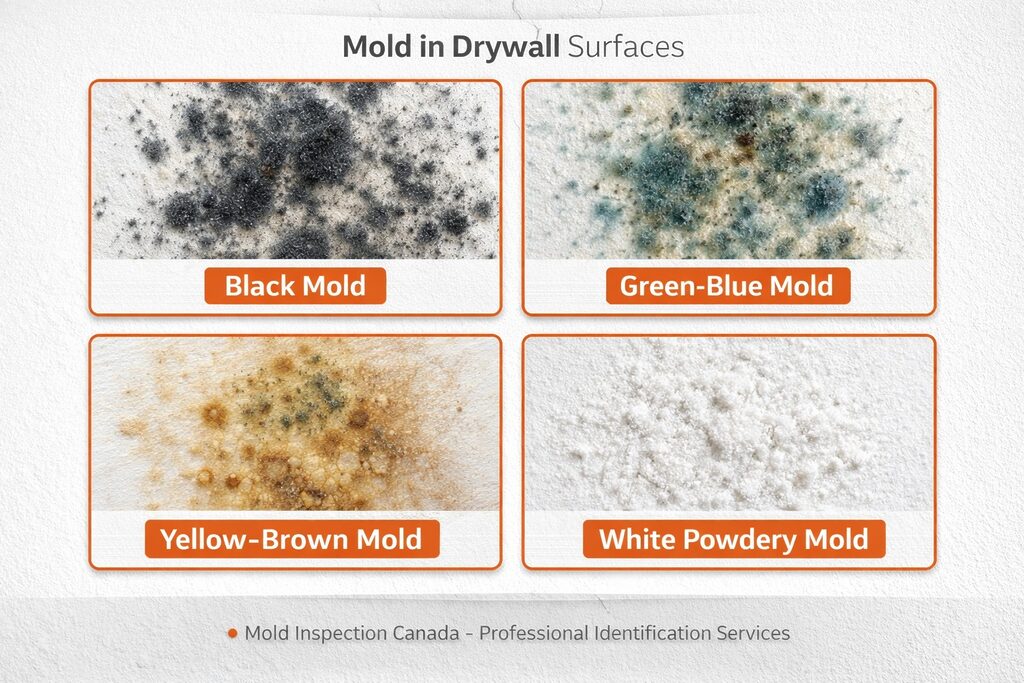
What Does Mold on Drywall Look Like?
Mold appears as dark spots, patches, or stains on wall surfaces. Colors range from black and green to brown, white, or orange. The texture changes from fuzzy and cotton-like when fresh to slimy or flat when older.
Common Visual Signs:
- Black, green, or brown splotches on walls
- Fuzzy or cotton-like texture on surfaces
- Yellow or brown water stains surrounding mold
- Peeling paint or bubbling wallpaper
- Powdery deposits that brush off easily
Can Mold Grow Inside Drywall?
Yes, mold grows inside drywall because the material is porous with tiny holes that trap moisture and spores. Once moisture enters through leaks or high humidity, mold can grow within 24-48 hours. The mold spreads through paper layers into the gypsum core, creating hidden colonies that continue growing even after surface cleaning.
Professional mold inspection services use moisture meters and thermal imaging to detect hidden mold inside walls.
Signs of Mold Behind Drywall
Physical Signs:
- Musty, earthy smell that persists
- Soft or crumbly spots when pressing walls
- Damp or cool feeling to touch
- Wall discoloration (yellow, brown, black)
Health Indicators:
- Unexplained allergic reactions
- Sneezing and coughing at home
- Watery eyes or skin rashes
- Symptoms improve when away
Learn more about health risks of mold exposure and protect your family.
Testing for Deep Penetration
Press Test: Gently press the drywall with your finger. Soft, spongy, or crumbly texture indicates deep moisture penetration and mold growth inside the material. Healthy drywall feels firm and solid.
Health Risks of Mold in Drywall
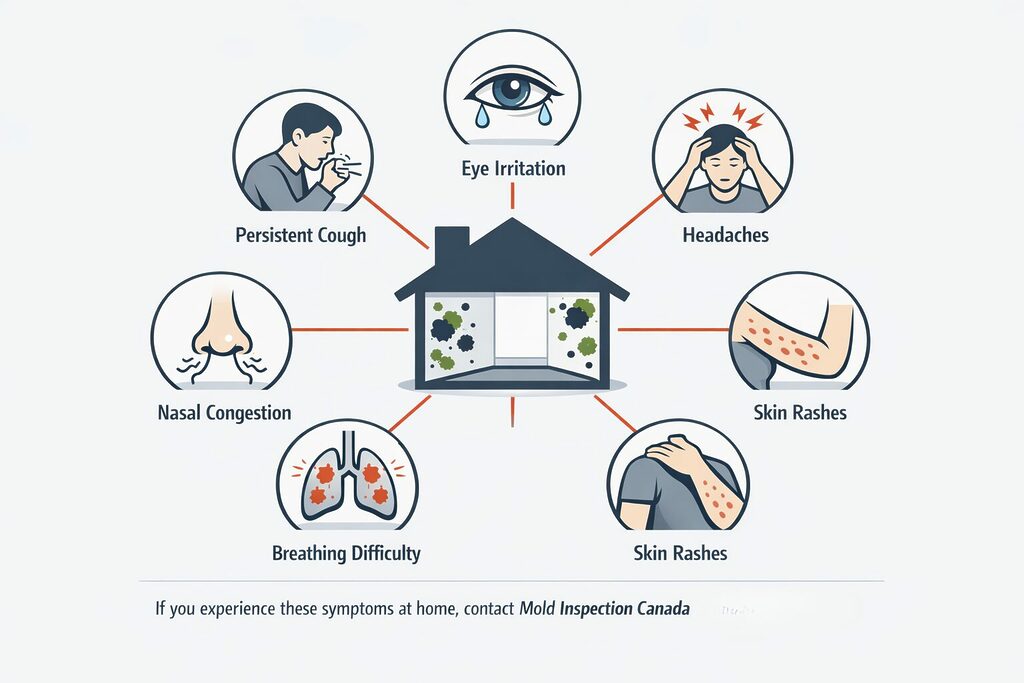
Is Mold in Drywall Dangerous?
Mold in drywall releases spores into your home’s air that cause health problems. Most people experience allergic reactions including sneezing, runny nose, red eyes, and skin rashes. Black mold (Stachybotrys chartarum) produces mycotoxins causing more serious issues like chronic coughing, headaches, and fatigue.
Common Mold Exposure Symptoms:
- Persistent coughing and wheezing
- Throat irritation and nasal congestion
- Skin rashes and hives
- Watery, burning eyes
- Headaches and fatigue
- Difficulty concentrating (“brain fog”)
- Worsening asthma symptoms
High-Risk Groups
Children, elderly people, pregnant women, and those with weakened immune systems or respiratory conditions face the highest risks. These individuals should avoid mold exposure entirely and leave the home during professional remediation.
How to Remove Mold from Drywall
Clean vs. Replace: Making the Right Decision
When You Can Clean:
- Surface mold on painted drywall
- Area less than 10 square feet
- Drywall feels firm and solid
- Mold only on one side
- No health concerns in household
When You Must Replace:
- Mold covers more than 10 sq ft
- Drywall feels soft or crumbly
- Mold on unpainted paper facing
- Mold appears on both sides
- Water damage from floods/leaks
The EPA 10 Square Foot Rule
The EPA states homeowners can remove mold covering less than 10 square feet (roughly 3 feet by 3 feet). Areas larger than this require professional mold remediation. This threshold indicates serious contamination requiring specialized equipment and expertise.
How to Measure
Measure all moldy patches separately and add them together for total square footage. Include mold on different walls or in different rooms. Even small patches totaling over 10 square feet need professional help.
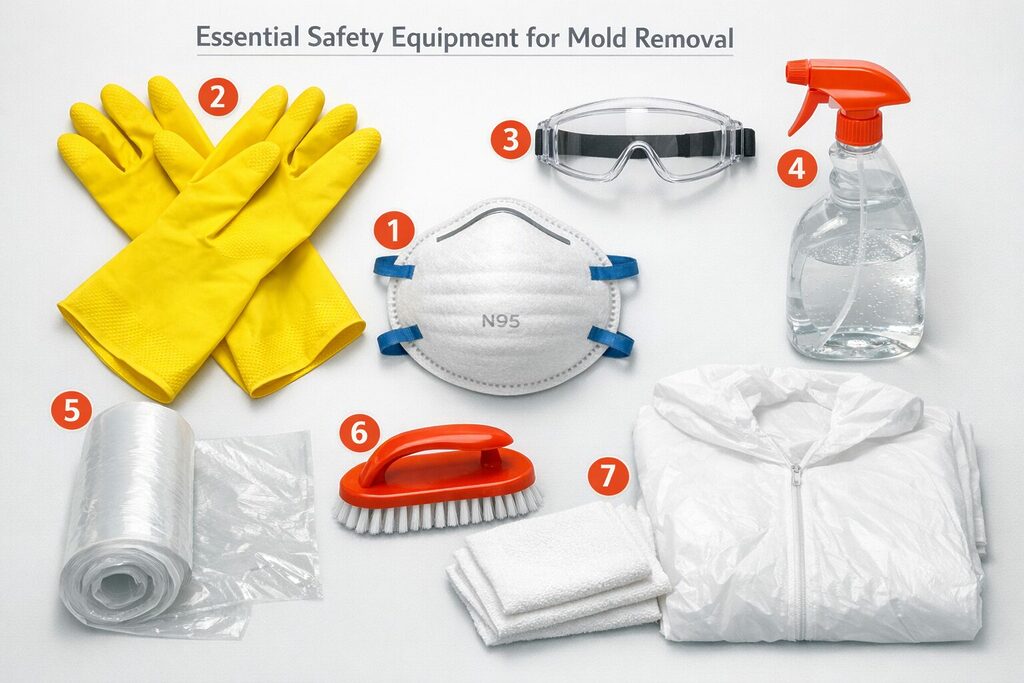
DIY Removal: Step-by-Step Process
Safety Gear
Wear N95 respirator mask, rubber gloves, safety goggles, and long sleeves. Use disposable coveralls if available.
Ventilate Area
Open windows and doors. Set up fans to blow air outside. Seal doorways to other rooms with plastic sheeting.
Apply Cleaning Solution
Spray 3% hydrogen peroxide or mix baking soda, vinegar, and water (2:1:1 ratio). Dampen surface without soaking.
Wait & Scrub
Wait 10 minutes for solution to kill spores. Scrub gently with soft brush. Wipe with disposable towels.
Dispose & Monitor
Bag all materials in sealed plastic bags. Monitor area for 3-4 weeks. If mold returns, replacement is needed.
When to Call Professionals
- Mold covers more than 10 square feet
- Hidden mold behind walls or in HVAC
- Family members show health symptoms
- Mold returns after DIY cleaning
- Water damage from floods or major leaks
Professional services identify root causes and ensure complete removal. Learn about professional mold testing options.
Mold Removal Costs in Ontario & Quebec
🇨🇦 Canadian Pricing Guide (CAD)
| Service Type | Size/Scope | Price Range (CAD) |
|---|---|---|
| Small Projects | Under 100 sq ft | $1,500 – $3,000 |
| Medium Projects | 100-300 sq ft | $3,000 – $5,000 |
| Large Projects | 300+ sq ft | $5,000 – $10,000+ |
| Per Square Foot | Professional rate | $15 – $35 |
| Mold Testing | Inspection & lab analysis | $300 – $700 |
| Drywall Replacement | Per sq ft (installed) | $3.50 – $7.50 |
What Affects Your Cost?
Major Cost Factors:
- Size of affected area: Larger areas cost more but may have lower per-square-foot rates
- Accessibility: Basements, crawl spaces, and attics cost more than wall mold
- Mold type: Toxic black mold requires extra safety protocols
- Water damage extent: Structural repairs add significant costs
- Location: Montreal and Ottawa pricing may be higher than Kingston or Cornwall
Insurance Coverage in Canada
Most policies cover mold from sudden water damage (burst pipes, appliance leaks) but not gradual problems or maintenance neglect. Document water damage immediately with photos and keep all receipts. Professional remediation companies provide detailed documentation that insurers require for claims processing.
Preventing Mold in Drywall
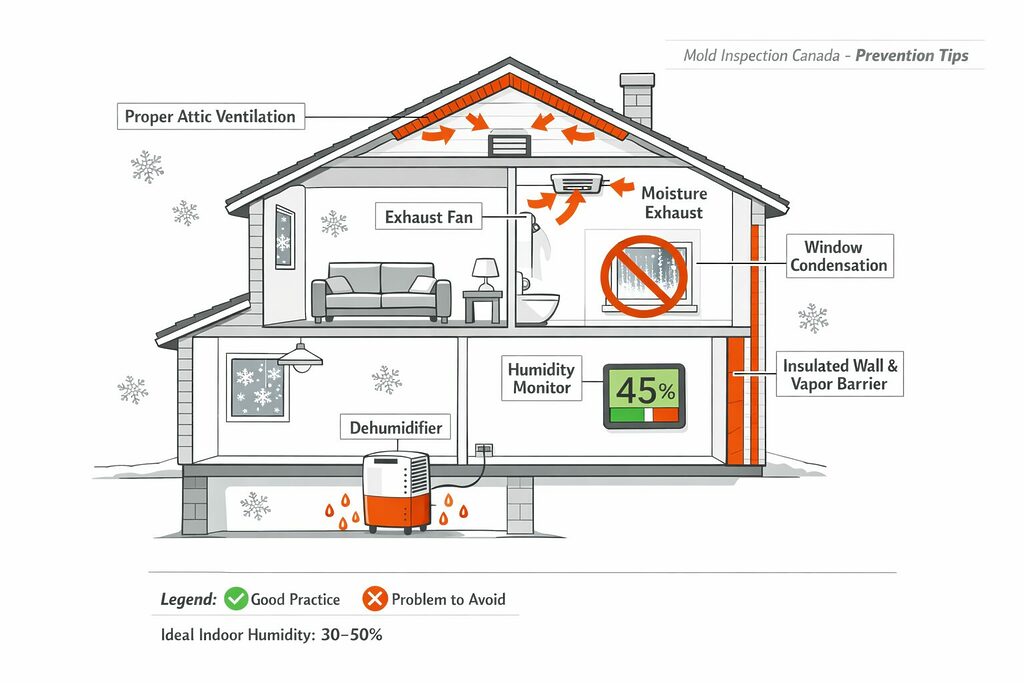
Act Fast After Water Damage
Dry wet drywall within 24-48 hours to prevent mold growth. Remove standing water immediately, open windows, and use fans pointed at wet surfaces. Run dehumidifiers continuously to maintain indoor humidity below 50%.
Emergency Drying Steps:
- Remove standing water with wet vacuums or pumps
- Open all windows and doors for air circulation
- Point fans directly at wet drywall
- Run dehumidifiers set below 50% humidity
- Remove baseboards to ventilate wall cavities
- Monitor with moisture meters daily
Humidity Control for Canadian Homes
Maintain indoor humidity between 30-50% year-round. Winter months require lower humidity (30-40%) to prevent condensation on cold surfaces. Quebec’s humid summers need dehumidifiers from May through September, especially in Montreal and Laval.
Winter Tips:
- Target 30-40% humidity
- Watch for window condensation
- Ensure proper insulation
- Monitor basement walls closely
Summer Tips:
- Target 40-50% humidity
- Use basement dehumidifiers
- Run bathroom exhaust fans
- Check for roof leaks
Long-Term Prevention Strategies
- Fix all leaks promptly: Check pipes, roofs, windows, and foundations regularly
- Install exhaust fans: Use in bathrooms, kitchens, and laundry rooms
- Use mold-resistant materials: Purple or green board drywall in high-humidity areas
- Improve ventilation: Ensure attics and crawl spaces have proper airflow
- Schedule annual inspections: Especially important for older homes
Learn about common locations where mold grows in homes.
Frequently Asked Questions
Can I paint over mold on drywall?
How long does mold take to grow on wet drywall?
Is all black mold toxic?
Can I use bleach on drywall mold?
Does insurance cover mold damage?
What’s the white fuzzy stuff on basement drywall?
Mold Issues in Ontario & Quebec
How Canadian Winters Affect Drywall
Winter freeze-thaw cycles create unique mold challenges. Exterior walls experience temperature differences causing condensation inside wall cavities. Ice dams allow water to seep into attics and walls. Closed houses trap moisture from daily activities without adequate ventilation.
Winter Risk Factors:
- Condensation on cold exterior walls
- Ice dam water infiltration
- Poor insulation increasing moisture
- Reduced ventilation in sealed homes
- Basement moisture from ground freezing
Regional Service Areas
Mold Inspection Canada provides expert services throughout Ontario and Quebec: