
Mold on Wood
Mold on wood is a common problem in Ontario and Quebec homes, especially after our harsh winters and humid summers. Small visible spots often signal larger hidden problems in walls, floors, or structural framing. This guide helps you identify what you’re dealing with, when you can handle it yourself, and when to call certified professionals.
Key threshold: For wood surfaces larger than 3 feet by 3 feet (10 square feet), or if you smell mold but can’t see it, you need professional help.
Is That Actually Mold on Your Wood? How to Know for Sure

You’ve spotted something on your wooden floor, furniture, or wall. Before you panic or start scrubbing, you need to confirm what you’re dealing with. Mold looks different from water stains, dirt, or natural wood discoloration.
Color Signs
Black, green, white, gray, orange, or pink patches that appear raised from the wood surface
Texture Indicators
Fuzzy, slimy, or powdery surface texture unlike smooth wood stains
Smell Test
Strong musty odor, like old wet socks or damp basements
Pattern Recognition
Spreads in circular or irregular patches, often in moisture-prone areas
Canadian homes face specific mold challenges. Our winter heating creates warm air that hits cold surfaces, causing condensation. Spring brings basement flooding and ice dam water leaks. Summer humidity in Southern Ontario and Quebec creates perfect conditions for mold to grow on any damp wood.
Common Types of Mold on Wood
| Mold Type | Appearance | Risk Level | Action Needed |
|---|---|---|---|
| Black Mold (Stachybotrys) | Dark black or dark green, slimy when wet | High | Call professionals immediately |
| White Mold | Powdery white or light gray patches | Moderate | DIY if small, professional if extensive |
| Green Mold (Aspergillus/Penicillium) | Blue-green or green patches | Moderate-High | Professional for large areas |
For small surface mold on non-structural wood (like furniture), visual identification is enough to start cleaning. For mold on structural wood, hidden mold, or large areas, skip the guessing and get proper professional mold testing.
Is Mold on Wood Dangerous? Health Risks You Need to Know
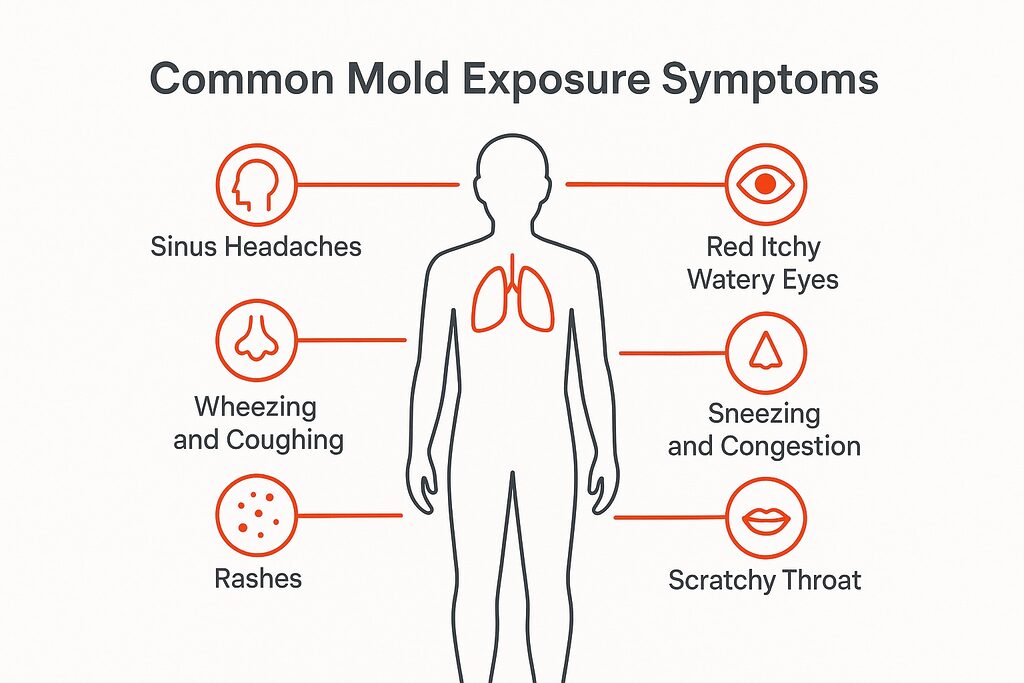
Immediate Health Symptoms
Most people experience allergic reactions first. Your body treats mold spores like pollen or dust. You might notice:
- Sneezing and runny nose that won’t stop
- Red, itchy, watery eyes
- Skin rashes or hives after touching moldy wood
- Scratchy throat and coughing
- Sinus headaches and congestion
These symptoms get worse when you’re near the moldy wood. Leave the room, and you feel better within hours. This pattern confirms mold is causing your problems.
Serious Respiratory Problems
Mold exposure causes real breathing problems, especially for people with asthma or allergies. Mold spores irritate lung tissue and trigger inflammation. Children and elderly family members face higher risks. Their immune systems don’t fight off mold exposure as effectively as healthy adults.
Long-Term Health Effects
Extended exposure to mold on wood causes chronic health problems. Black mold produces mycotoxins that affect your nervous system and immune function. Learn more about health risks of mold exposure and why quick action matters.
When Small Spots Mean Big Problems
Here’s what most homeowners miss: small visible mold on wood often signals much larger hidden growth. Wood is porous. Mold you see on the surface sends root systems deep into the wood fibers. Behind that small patch might be extensive growth inside your walls.
If you smell musty odors but only see tiny spots of mold, assume there’s more you can’t see. Water damage history in your home increases this risk significantly. Don’t wait until the problem spreads further.
Can You Remove Mold from Wood Yourself? DIY vs Professional Help
The biggest mistake homeowners make is starting to clean mold without understanding the scope of the problem. Sometimes DIY works fine. Other times, you spread spores throughout your home and make things worse.
The 10 Square Feet Rule
DIY Appropriate
Less than 10 square feet (roughly 3 feet by 3 feet)
- Surface mold only
- Non-structural wood
- No health conditions
- Recent growth
Professional Required
More than 10 square feet
- Structural wood affected
- Hidden mold suspected
- HVAC involvement
- Health concerns exist
When You Must Call Professionals
Never attempt DIY mold removal when:
- Structural wood is affected: Floor joists, wall studs, roof sheathing, or any wood that holds up your house
- Hidden mold is suspected: You smell mold but can’t find the source
- Water damage was extensive: Flooding, major leaks, or long-term moisture exposure
- HVAC system involvement: Mold near heating or cooling systems spreads spores everywhere
- Health concerns exist: Anyone has asthma, allergies, respiratory problems, or weakened immunity
- Previous DIY attempts failed: If you cleaned mold and it came back
Ontario and Quebec have specific mold inspection protocols for commercial properties, but homeowners also benefit from professional standards.
What Professional Inspection Includes
Moisture Mapping
Special meters detect moisture levels inside walls, floors, and ceilings without cutting holes
Thermal Imaging
Infrared cameras reveal temperature differences indicating hidden moisture and mold
Air Quality Testing
Lab analysis determines what mold species are floating in your home’s air
Comprehensive Reports
Detailed documentation of findings, recommended actions, and cost estimates
Ready to Get Professional Assessment?
Don’t risk your family’s health with guesswork. Our certified inspectors have 20+ years of experience.
How to Remove Mold from Wood: DIY Methods and Safety Steps
If your situation qualifies for DIY removal (small area, surface mold, non-structural wood), follow these steps exactly. Cutting corners spreads spores throughout your home or leaves mold roots that regrow within weeks.
Required Safety Equipment
N95 Respirator
Blocks 95% of airborne particles. Cloth masks won’t work.
Rubber Gloves
Long gloves that reach your forearms to protect skin
Safety Goggles
Ventilation-free goggles prevent spores from reaching eyes
Disposable Clothing
Wear items you can throw away or wash separately
Step-by-Step Cleaning Process
Prepare Your Work Area
Close doors, turn off HVAC, open windows, cover floors and furniture with plastic sheeting
Put On Safety Equipment
Wear all protective gear before approaching the moldy wood
Apply Cleaning Solution
Spray or apply generously to cover all visible mold (vinegar, hydrogen peroxide, or detergent solution)
Wait and Scrub
Let solution sit (1 hour for vinegar, 10 minutes for peroxide), then scrub firmly with stiff brush
Wipe and Dry
Remove mold and solution with disposable towels, then dry completely using fans for 24+ hours

Effective Cleaning Solutions
| Solution | Best For | Application | Wait Time |
|---|---|---|---|
| Distilled White Vinegar | Unfinished wood, surface mold | Spray undiluted, saturate area | 1 hour |
| Hydrogen Peroxide (3%) | Unfinished wood, stubborn mold | Spray and let fizz | 10 minutes |
| Dish Detergent + Water | Painted/sealed wood | 1 tbsp per quart water | Immediate scrub |
| Borax Solution | Painted wood, prevention | 1 cup per gallon water | Air dry, don’t rinse |
For more guidance on DIY versus professional approaches, review our comparison guide on professional vs DIY mold removal.
Preventing Mold Growth on Wood: Long-Term Protection Strategies
Cleaning mold doesn’t fix the problem that caused it. Without controlling moisture, mold returns within weeks or months. Prevention focuses on keeping wood dry and maintaining proper conditions.
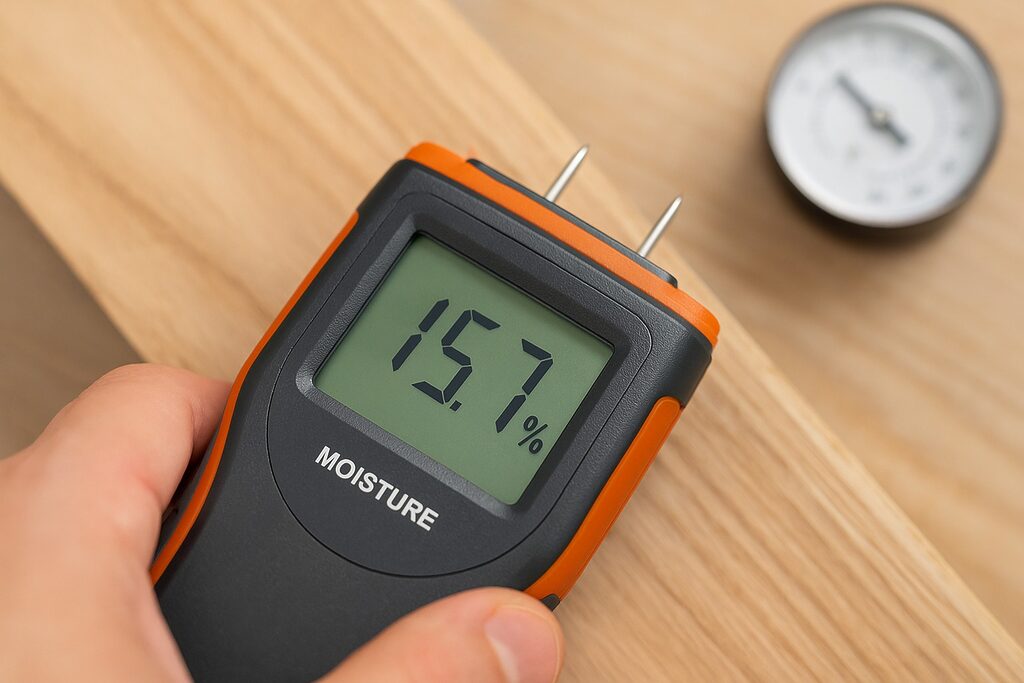
Moisture Control Foundation
Target humidity levels for Ontario and Quebec homes:
- Winter: 30-40% relative humidity to prevent condensation on cold surfaces
- Summer: 40-50% relative humidity to reduce moisture without feeling uncomfortably dry
- Basements: Under 50% year-round, watch for seasonal flooding in spring
Buy a hygrometer (humidity meter) for each floor of your home. These inexpensive devices ($15-30) tell you exactly what’s happening with indoor moisture levels. When humidity rises above target ranges, take action immediately.
Dehumidifiers and Ventilation
Basement mold is common in Ontario and Quebec because underground spaces naturally have higher humidity. A quality dehumidifier makes the difference between constant mold battles and clean wood surfaces.
Small Spaces
Up to 1,500 sq ft
30-pint capacity
Medium Spaces
1,500-2,500 sq ft
50-pint capacity
Large/Damp Spaces
2,500+ sq ft or very damp
70-pint capacity
Ventilation moves humid air out and brings fresh air in. This is especially important in bathrooms and kitchens where activities create moisture. Run bathroom fans during showers and for 30 minutes after. Run kitchen exhaust fans when cooking, especially when boiling water.
Fixing Water Problems Before Mold Starts
Every mold problem starts with a water problem. Check these common water sources in Canadian homes:
- Ice dams: Winter ice on roof edges causes water backup under shingles
- Basement leaks: Spring snowmelt and heavy rain overwhelm foundation drainage
- Condensation: Warm humid air hits cold surfaces creating water droplets
- Plumbing leaks: Slow drips saturate nearby wood over time
- Poor grading: Ground slopes toward foundation instead of away
Seasonal Maintenance for Canadian Homes
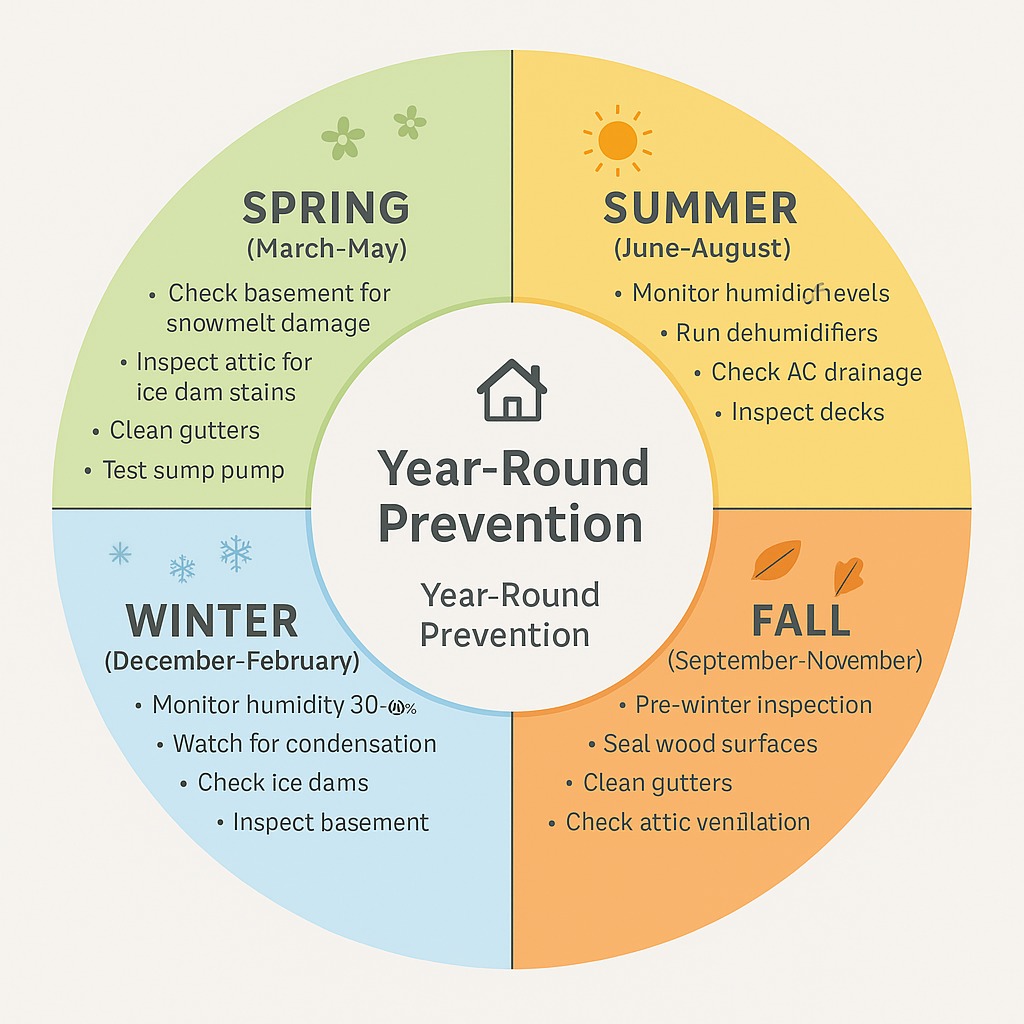
| Season | Key Tasks |
|---|---|
| 🌸 Spring | Inspect basement for water damage from snowmelt • Check attic for ice dam stains • Clean gutters and downspouts • Test sump pump operation |
| ☀️ Summer | Monitor basement humidity levels • Run dehumidifiers during humid periods • Check AC condensation drainage • Inspect wood decks for mold |
| 🍂 Fall | Schedule pre-winter home inspection • Seal exterior wood surfaces • Clean and inspect gutters • Check attic ventilation |
| ❄️ Winter | Monitor indoor humidity (30-40%) • Watch for window condensation • Check for ice dam formation • Inspect basement for condensation |
Prevention costs less than remediation. Spending $200-400 annually on dehumidifiers, maintenance, and small repairs beats spending $5,000-15,000 on major mold remediation projects. Learn how often you should inspect for mold to stay ahead of problems.
What Does Professional Wood Mold Inspection and Wood Removal Cost in Ontario and Quebec?
Money concerns prevent many homeowners from calling professionals early. Understanding real costs helps you make informed decisions and avoid expensive mistakes from DIY attempts on problems that need expert help.
Mold Inspection Costs
What you get for inspection costs:
- Complete visual assessment of entire property
- Moisture meter readings throughout the home
- Thermal imaging for hidden moisture detection
- Air quality and surface sampling (basic level included)
- Detailed written report with photos
- Remediation recommendations and cost estimates
Mold Inspection Canada offers a free virtual mold inspection as a starting point. This video-based assessment helps determine if you need a full on-site inspection, saving you money on unnecessary visits for minor issues you can handle yourself.
Mold Remediation Costs
Small Projects
$500 – $1,500
Less than 10 sq ft • Surface mold • Bathroom trim or furniture • Usually 1 day completion
Medium Projects
$1,500 – $5,000
10-100 sq ft • One room • Basement framing or wall cavity • 2-5 days with drying
Large Projects
$5,000 – $15,000+
Over 100 sq ft • Multiple rooms • Full containment and structural repairs • 1-2 weeks
Additional potential costs:
- Lab testing: $300-500 for comprehensive analysis
- Structural repairs: $1,000-10,000 depending on damage extent
- HVAC system cleaning: $500-2,000 if mold entered ductwork
- Content storage: $500-2,000/month if belongings need temporary removal
Insurance Coverage for Mold
Standard Ontario and Quebec homeowner’s insurance policies typically exclude mold damage UNLESS the mold resulted from a covered peril like sudden pipe burst, storm damage, fire suppression water, or appliance malfunction causing immediate flooding.
For more details on pricing, visit our mold remediation cost guide for homeowners in Canada.
Price Match Guarantee
Quality mold remediation isn’t cheap, but Mold Inspection Canada offers a price match guarantee. Get competitive quotes, and we’ll match or beat legitimate competing prices for the same scope of work.
Frequently Asked Questions About Mold on Wood
How quickly does mold grow on wet wood?
Can mold be completely removed from wood?
Will mold come back after cleaning?
Is it safe to sleep in a room with mold on wood?
Can I paint over mold on wood?
What’s the difference between mold and mildew on wood?
How do I know if wood is too damaged to save?
When should I call a mold inspector versus trying DIY removal?
Take Action: Get Your Ontario or Quebec Home Inspected Today
Small mold problems become big problems when ignored. What looks like a minor spot on wood trim might signal hidden mold inside your walls. Musty odors you’ve gotten used to indicate active mold growth affecting your family’s health every day.

We Serve Your Area
Certified inspectors available in:
Certifications You Can Trust
Mold Inspection Canada holds professional certifications including:
- NORMI (National Organization of Remediators and Mold Inspectors) Certified
- InterNACHI Mold Certified
- IICRC (Institute of Inspection, Cleaning and Restoration Certification)
- CRMI (Certified Residential Mold Inspector)
- NAMRI Member
- NAMP Certified