
Toronto and the GTA
Mold Inspection and Testing in Toronto
Start with a free virtual mold assessment, on a video call, at no cost and with no one coming to your home. If you need samples taken and analyzed, we schedule an on-site visit by appointment. Every sample goes to an independent AIHA-accredited laboratory.
Short answer
A free virtual mold assessment for a Toronto home takes about 20 to 30 minutes on a video call. You walk us through what you are seeing and smelling, and we tell you whether what you have is mold, condensation, or staining that needs nothing at all. If it warrants physical testing, we book an on-site visit and take air or surface samples, which go to an independent AIHA-accredited third-party laboratory. Written results follow in 24 to 48 hours. In Toronto we currently work by scheduled appointment rather than same-day dispatch.
How we work in Toronto right now
We’d rather be straight with you about this than have you find out after booking. Our inspectors are based in the Ottawa and Montreal corridors, and Toronto is a market we are expanding into deliberately rather than all at once.
What that means in practice: the free virtual assessment is available to any Toronto homeowner immediately, and it is the same assessment we run anywhere else. On-site sampling is scheduled by appointment rather than dispatched same day. If you have water coming in right now and need somebody through the door within hours, we aren’t the fastest option in this city and we’ll say so on the call.
What you can book today
A free virtual assessment over video. We look at what you are seeing, ask about the building, the moisture history and the ventilation, and give you a straight read on whether this needs testing. Plenty of these calls end with us telling somebody they don’t need to hire anyone.
What we schedule
On-site inspection with moisture mapping, thermal imaging and laboratory sampling, arranged for a set date rather than same day. If the virtual call shows you need physical testing, we book it then. Remediation is arranged the same way.
Worth knowing
The virtual assessment is genuinely free and it isn’t a sales screening. We’re not going to tell you that you need an inspection when the photo shows efflorescence on a foundation wall or condensation on a cold-water pipe. Those are the two most common things Toronto homeowners send us that turn out not to be mold.
Why Toronto buildings develop mold
Toronto’s mold problems cluster by building age and building type more than by neighbourhood. The city’s housing stock spans well over a century, and each era fails in its own way.
Pre-war brick and rubble foundations
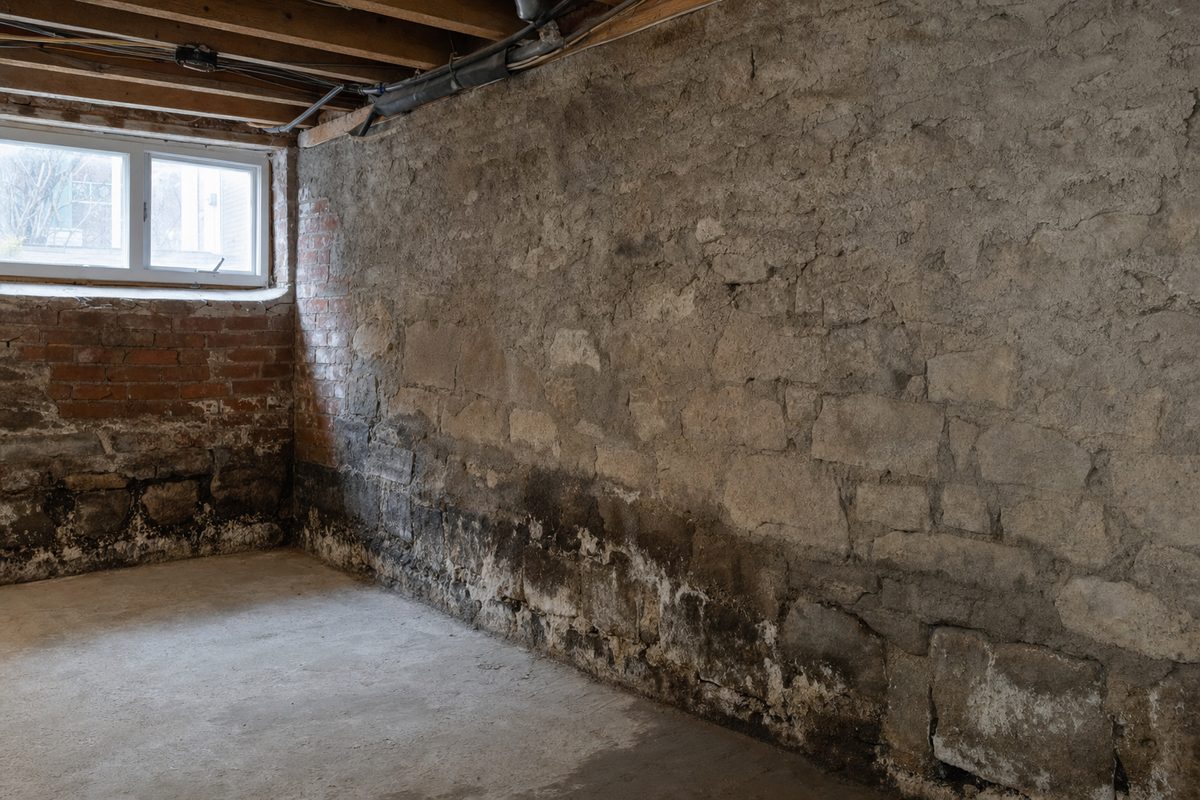
The older stock across the Annex, Riverdale, Parkdale, Leslieville and the east end sits on rubble or early poured foundations with no exterior membrane. Groundwater moves through the wall into finished basements. Growth typically starts behind studwork and insulation, so the first sign is smell rather than a visible stain.
Post-war bungalows and finished basements
Scarborough, North York and Etobicoke carry a lot of mid-century block foundations that were finished into living space decades after they were built. Framing an uninsulated block wall traps moisture against organic material, which is why so many Toronto basement apartments have a problem the owner cannot see.
Condominiums and high-rise units
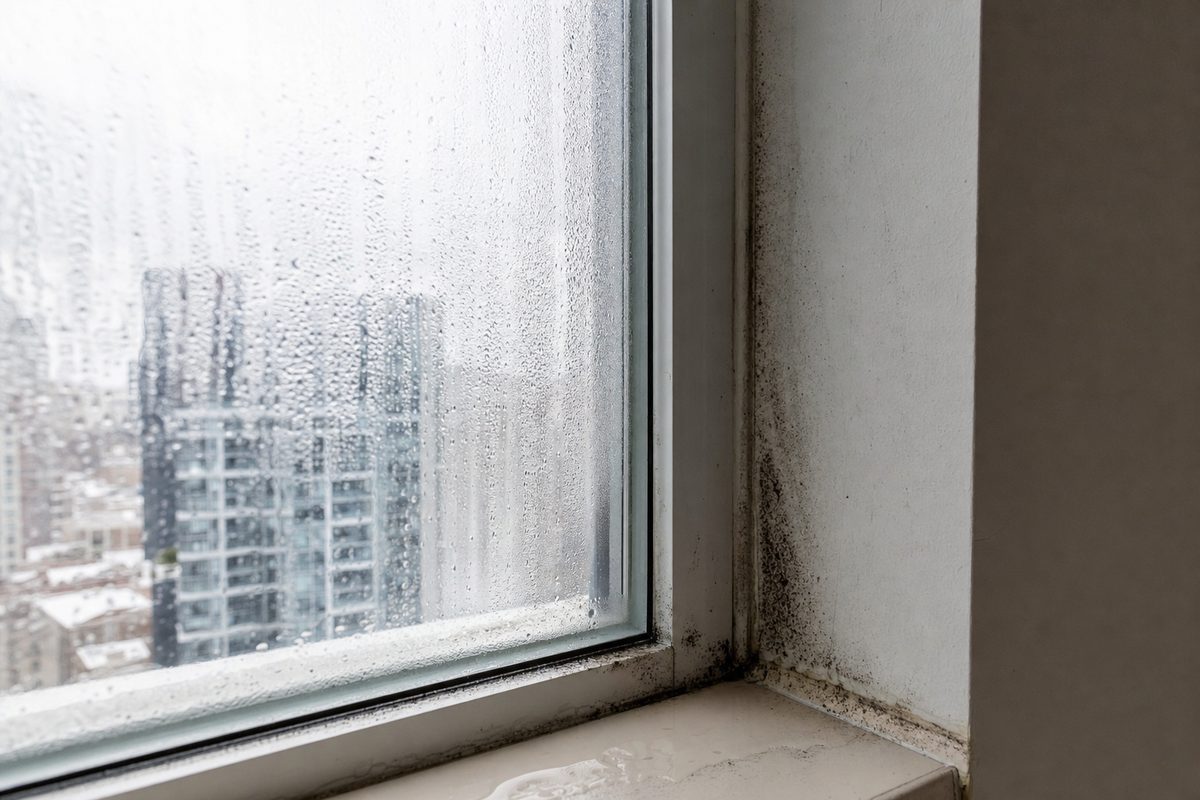
Condo mold is usually a ventilation or envelope issue rather than groundwater. Sealed units with underused bathroom fans, window condensation running into drywall, and shared-wall leaks from a neighbouring unit are the recurring three. Responsibility is often split between the owner and the corporation, which is where a written report matters most.
Whatever the building, the rule is the same: mold cleaned without fixing the water source grows back. Finding the moisture is the point of the inspection.
What the virtual assessment covers

You show us what you have
A video call from your phone. Walk us to the area, show us the surface, the surrounding materials and anywhere water might be arriving. Photos beforehand help but are not required.
We ask about the building
Age, foundation type, ventilation, whether the basement is finished, any leak or flood history, and how long the smell or staining has been there. In Toronto the building era usually narrows the cause quickly.
You get a straight answer
One of three outcomes: this isn’t mold and needs nothing, this is something you can address yourself, or this needs physical testing and here is specifically why. We tell you which on the call.
We book testing only if warranted
If sampling is justified, we schedule the on-site visit and explain what will be sampled and what the laboratory analysis will establish. If it isn’t warranted, we say so and the call ends there.
Testing types and when each one applies
Sampling only helps when the result changes what you do next. These are the types we use and what each one actually establishes.
| Test | What it establishes | When it is worth doing |
|---|---|---|
| Air sampling | Indoor spore counts measured against an outdoor control taken the same day | Suspected hidden growth, or a health complaint with no visible source |
| Surface sampling | What species is growing on a specific material | Visible growth where identification changes the remediation approach |
| Moisture mapping and thermal imaging | Where wet material sits behind a finished surface | Almost every on-site visit, because it locates the water source |
| Clearance testing | Whether completed remediation actually worked | After removal, before rebuilding over the area |
| Pricing | Inspection, laboratory and remediation cost ranges across Canada | See the mold remediation cost guide |
Samples go to an independent AIHA-accredited third-party laboratory. We do not analyze our own results, which means the numbers in your report are not produced by the company quoting you for the work.
Signs worth acting on
A musty smell with nothing visible
Smell without a visible source usually means growth behind a finished surface. It is the single most common reason Toronto homeowners call us. More on what the smell indicates in our guide to musty smells in the house.
Staining on a basement wall
Dark patches on block or brick may be mold, or may be efflorescence, which is mineral salt left behind by evaporating water. They are treated completely differently. See basement mold.
Symptoms that ease when you leave home
Congestion, irritated eyes or a cough that improves after a few hours away and returns when you get back is a pattern worth investigating. Background on mold allergies and symptoms.
Any water event in the past two months
Growth can begin within 24 to 48 hours of material getting wet, but the mold question usually surfaces two to six weeks later. Burst pipe, failed sump, water in the basement after a storm. See water damage and mold.
Renting a Toronto apartment or condo
A large share of Toronto’s mold calls come from tenants, and the situation is different from an owner’s. In Ontario the landlord is responsible for maintaining a rental in a good state of repair, which covers the moisture source behind mold growth. What tenants usually lack is documentation, and that is what an inspection report provides: a dated, third-party record of what was found and where the water is coming from.
Condo owners run into a related split. If the water is arriving through the building envelope or from a neighbouring unit, remediation may be the corporation’s responsibility rather than yours, and a report is what settles that conversation.
Our guide to mold in apartments and tenant rights covers the Ontario process in detail.
Areas we cover in the Toronto region
City of Toronto
Downtown and the Annex, Riverdale, Leslieville, Parkdale, High Park, the Beaches, Scarborough, North York, Etobicoke, East York and York.
Greater Toronto Area
Mississauga, Brampton, Vaughan, Markham, Richmond Hill, Oakville, Burlington, Milton, Pickering, Ajax and Whitby.
The free virtual assessment is available across all of these. On-site visits are scheduled by appointment.
Frequently asked questions
How can I get a free mold inspection in Toronto?
Our virtual assessment is free and available to any Toronto homeowner or tenant. It is a video call of roughly 20 to 30 minutes where we look at the area, ask about the building, and tell you whether it needs testing. There is no charge and no obligation to book anything afterwards. Physical on-site inspection with laboratory sampling is a paid service.
How much does a mold inspection cost in Toronto?
The virtual assessment is free. On-site inspection is quoted at booking and depends on the size of the property and how many samples are warranted, with laboratory analysis quoted separately. Our cost guide sets out the ranges for inspection, testing and remediation across Canada so you can see what is reasonable before anyone quotes you.
Can you come out today?
Not in Toronto. On-site visits here are booked by appointment rather than dispatched same day, because our inspectors travel to the GTA on a scheduled basis. The virtual assessment is usually available much sooner. If your situation needs somebody on site within hours, we’ll tell you that on the call rather than book you in and leave you waiting.
Do you do removal, or only testing?
Both. We inspect, test, and carry out remediation with certified crews, then run clearance testing afterwards to confirm the work succeeded. You are equally welcome to take our report to another contractor. The laboratory analysis is done by an independent accredited third party either way, so the findings do not depend on who does the removal.
Is a virtual assessment actually useful, or is it just a sales call?
It’s useful in two directions. It rules things out, and a good share of these calls end with us telling somebody they have condensation or efflorescence and do not need to hire anyone. When it does not rule things out, it tells us what to sample and where, which makes the on-site visit shorter and cheaper than walking in blind.
Are mold inspections worth it?
They are worth it when the answer changes what you do: hidden growth you cannot locate, a health complaint with no visible source, a purchase or sale, an insurance claim, or a dispute with a landlord or condo corporation. They aren’t worth it when you can already see the growth, you know where the water came from, and the area is small enough to handle yourself. Our DIY inspection guide covers that second case.
What are the warning signs of a mold problem?
A persistent musty smell with no visible source, dark staining on basement walls or ceilings, peeling paint or bubbling drywall, window condensation that keeps returning, and symptoms such as congestion or irritated eyes that ease when you are away from the building and come back when you return.
Will my insurance cover mold in Ontario?
Ontario policies typically cover mold resulting from a sudden covered event such as a burst pipe, and typically exclude damage from long-term seepage or deferred maintenance. A dated inspection report documenting the moisture source is usually what a claim turns on.
Book a free virtual assessment in Toronto
Start with the video call. It costs nothing, it takes about half an hour, and if it turns out you don’t need us we’ll tell you that instead of booking you in.
Prefer to talk to someone
Call 613-701-9893or send us the details